
Living a Life in Balance
Access the Wisdom of your Body: How Mindfulness, Meditation and Breathwork help in Trauma Therapy
With David Cornwell
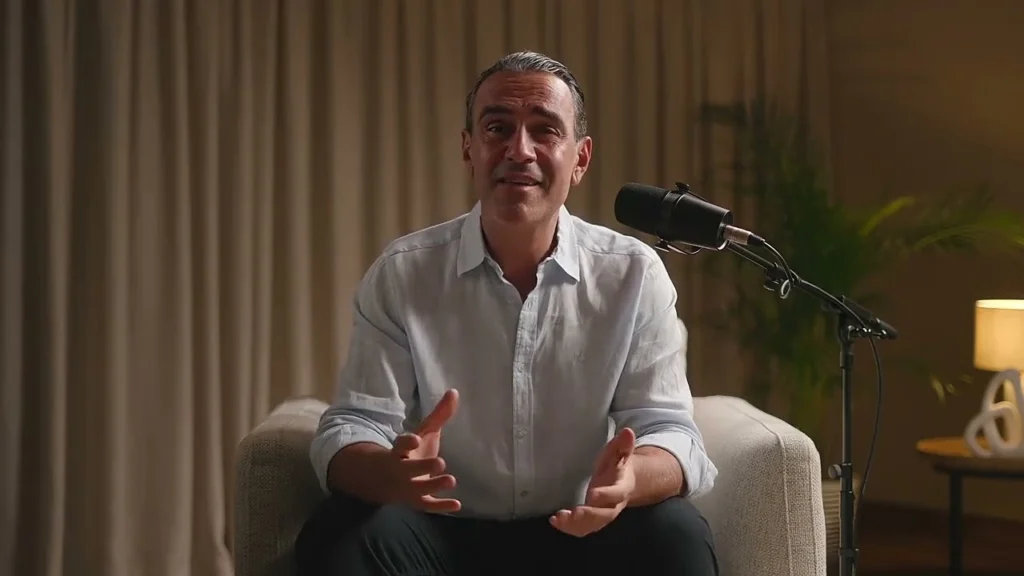
David Cornwell explores mindfulness, meditation, breathwork, and the role of body awareness in trauma therapy.
Listen to the conversation
Access the Wisdom of your Body: How Mindfulness, Meditation and Breathwork help in Trauma Therapy
David Cornwell
Inside this conversation
What Is Meditation? A Simple Introduction
How Therapy and Meditation Changed David’s Life
Healing Trauma Through Mind-Body Integration
More themes
- Training in Mindfulness-Based Psychotherapy Explained
- Learning from Chris Cullen and Oxford’s Influence
- The Neuroscience Behind Mindfulness and Healing
- Personal Growth: How Meditation Shapes the Self
Find a moment
All chapters
The guest
David Cornwell
About David: David Cornwell is an accredited psychotherapist with a Master’s in Mindfulness-Based Cognitive Therapy from Oxford and over 25 years of personal mindfulness practice. He specializes in body-centered approaches to healing trauma, depression, and chronic stress, combining talk therapy with somatic techniques and EMDR. After living with asthma for 35 years, David developed a program that helped him become completely medication-free — an experience that deeply informs his work. Today, at The Balance, he supports clients in releasing long-held tension and reconnecting with their innate capacity to heal, blending psychotherapy, mindfulness, and body awareness into a truly integrative path to transformation.
From the host
Reflections on the conversation
What stayed with me from this conversation
+
Speaking with David Cornwell, I was struck by the way this conversation connected the relationship between physical experience, emotional regulation and a felt sense of safety. These subjects are often discussed separately, although in a person’s life they can influence one another continuously.
I was struck by how often people learn to explain their experience intellectually while remaining disconnected from physical signals. Body-based awareness can add an important dimension, provided that it is paced carefully and integrated with appropriate psychological and medical assessment.
The central lesson for me is not that the body replaces the mind. It is that human experience is interconnected. Movement, breath, touch, sleep and sensation may matter alongside language, reflection and relationships, with every intervention selected for the individual.
My broader reflection is that balance is not a fixed destination. It is the capacity to notice what is happening, understand what may be driving it and respond with greater awareness. Professional support can help create that capacity, but it must remain grounded in the person’s circumstances, choices and safety.
Episode summary
+
Watch now for a conversation that just might change the way you think about the connection between your body, mind, and emotions.
Throughout the discussion, we return to the importance of looking beneath visible symptoms or behaviors. The aim is not to force one explanation onto every experience, but to understand the combination of history, relationships, body, environment and meaning that may be relevant for this individual.
The full transcript
Original-language transcript · EN